From my experiences over the past week, there have been many lessons that I have had to learn that will contribute to my success in my turfgrass career. In my opinion the most important lesson I had to learn was about how important communication is. During this week I’ve had to complete multiple large projects using google forms, google sheets and even creating a novel instructional guide. The novel instructional guide was part of our calibration project and we had to come up with a creative way to capture the audience’s attention, while still having an informative project. This was the biggest test of communication because we had to have many discussions on how we wanted to execute this project. Having to do all of this with a partner is a bit harder than doing it on your own, because both partners are going to have different thoughts on how to plan, design and complete the project.
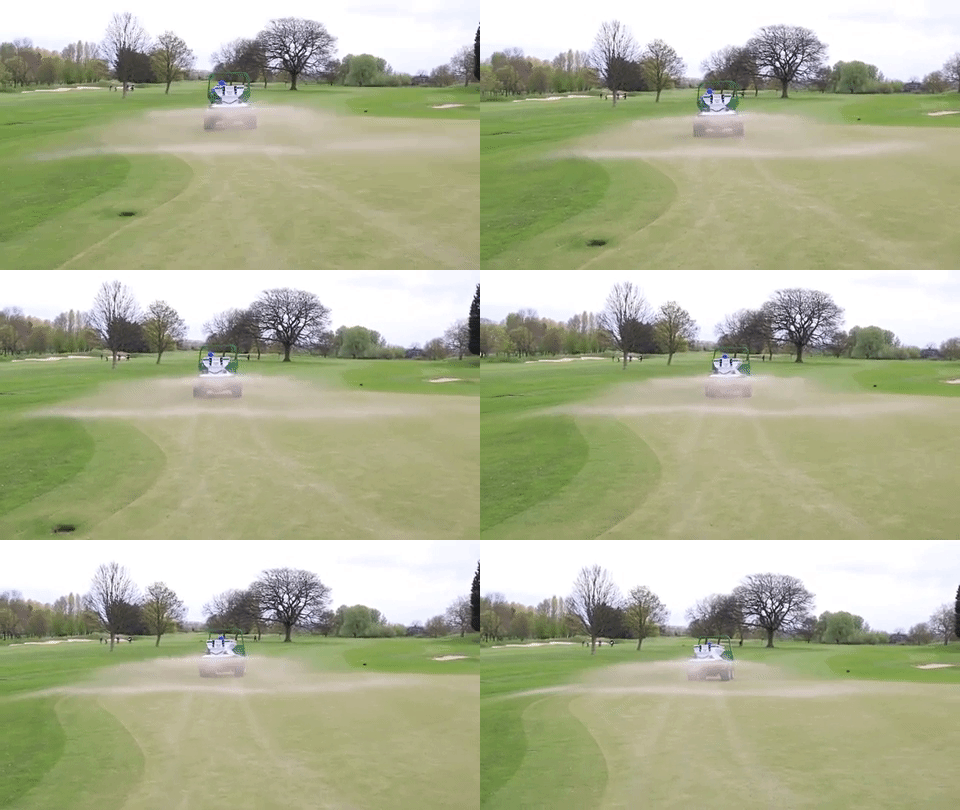
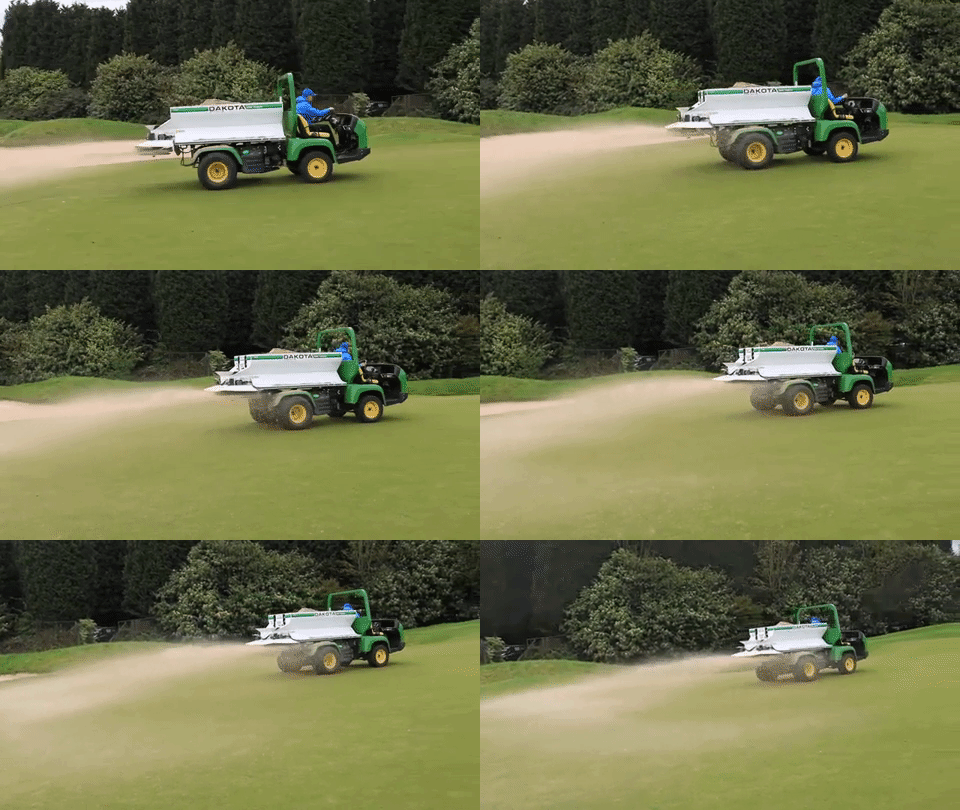
This is a GIF created by my partner Josh and I, that we included in our creative novel for calibration!
Having my partner living off campus really tested my communication skills because I wasn’t able to simply walk over to him and work on the project. We had to use alternative ways to work on projects together, such as texting or even talking on the phone. The constant communication we had throughout these projects helped me to understand parts of the projects I was unable to figure out on my own, which made the projects proceed smoothly. The communication wasn’t only within my group, as we were able to network with other groups in order to find the answers to the questions we had.
All of these experiences really opened my eyes to how important communication is, especially in the workplace. I plan to use the skills I learned to better the way I communicate with my coworkers and employees on a daily basis. I also will use these skills if a problem arises in the future. Being able to communicate with those around me, or even talking to classmates over the phone could help bring me to a solution faster than if I were to sit there alone and try to figure it out.
Today I am writing about my experience in my first week of Turf 1600. I can explain my biggest obstacle that I had to overcome in one word: “Spreadsheets.” I came into this class with absolutely no experience with any type of spreadsheet program. Looking at all the functions that went into creating our seed calculators made my stomach turn. I’m not going to lie, when we were told to go out and figure it out, I had very low expectations of myself grasping how to formulate a calculator using Google sheets. It was a very long and stressful day trying to figure out how to use the IF and IFS functions. Many of my fellow classmates were surrounding each other in the library trying to figure it out. After what seemed like days, we all started to understand the concept and after practicing over and over, it was almost like there was an invisible line of understanding that I had crossed. My eyes opened to a world of possibilities that google sheets had to offer that could help me in my future of turfgrass management.
This is a photo of the seed calculator me and my partner created for Turf 1600
From this experience, I can honestly say I have learned a lot about myself as a person. I was worried about if inquiry based learning was going to work for me, due to the fact I had always been taught in lectures and had the materials put right in front of me. By researching and practicing, I have learned more then I ever would have if it was spoon fed to me; it is also information that is basically glued into my brain now, all because I spent the time to figure it out and ask the correct questions to get me to my goal.
In the future I plan to use this wonderful technology to my advantage. I can use it to keep track of not only inventory of certain products; but also to help make my golf course more efficient when it comes to tracking finances, employee hours and to my own personal gain when it comes to fertilizer and/or pesticide applications. It can help me to keep track of what I have sprayed, when I have sprayed it, and where I’ve sprayed it. Of course, it will take a bit of time to set the spreadsheet up and link it to a google form, but in the end it’s definitely worth it. With a click of a few buttons, I can have all of my information displayed within seconds, thus keeping it more organized for myself, my board of directors/management and my documentations for AGCanada.
During these last few weeks of turfgrass, I have learned a lot of stuff
about Inquiry based learning. I also learned a lot about myself. The biggest
wake up call I have had in this course so far was during the preparation of our
cultural practice presentations. I had to learn how to be a team player, after
being thrown into an unfamiliar environment. At the beginning of this project,
I was in a completely different group which I was comfortable in. Due to
unforeseen circumstances, I was changed to a whole new group. I’ll tell you
this, it was extremely intimidating.
Being sort of an introvert, I was absolutely frightened to meet a whole new group of people and struggled to open up my ideas and thoughts to them. I found out really quick that these guys are in the same boat as me. I quickly created a bond with this new group and that helped me get over my fear of meeting new people; thus, resulting in me starting to reach out to other groups. It really helped me network with other turf members, and in turn helped me have a better understanding of an inquiry based learning environment.
Creating these new bonds helped me contribute to our topdressing project in a way that really opened my eyes to the topic; which in itself, substantially sparked my interest even more in the turfgrass sense. Learning about something that I had done many times before, but never really knew why I was doing it, gave me lots of encouragement to research the topic further in depth and bettered my knowledge on topdressing.
In turn of these events, I believe it has helped my future substantially
to realize getting out there and meeting new people is truly one of the best
ways to better yourself as a person. Meeting new people helps you network, it
helps you understand the way other people think and I believe as a potential
manager, these are the skills that will make you shine. Being able to
understand someone by having a conversation with them can benefit the both of
you in more ways than one. Personally, that project was a huge life changing
experience for me, and really opened up my eyes in a personal aspect and a
turfgrass point of view. I’m very excited to see what the next block has in
store for me and my classmates.
If you’ve ever found yourself asking: Why is there sand on the greens? What is topdressing? Why do we need to topdress? The greens were perfect yesterday, why make a change? Maintaining optimal playing conditions on the turf helps achieve lower scores, faster rate of play and in turn, a better golf experience.
Topdressing is one of the procedures we use to help maintain these playing conditions. By adding a layer of fine sand and/or soil onto the turfgrass surfaces, you will reap the benefits of a true, firm and fast green, as well as see reduced foot traffic damage. Topdressing increases the firmness of greens by allowing proper drainage, this helps to avoid soft, spongy playing conditions which are caused by the natural growth process and exposure to the elements of nature.
No one likes having a ball sink into the green after a beautiful fairway shot. One of the factors that helps us keep a firm, smooth playing surface is thatch. Thatch consists of a layer of organic matter both living and dead, that resides on top of the soil surface. If thatch gets too thick it can affect the playability of your lie. Topdressing helps us prevent thatch from getting too thick. This creates a small amount of thatching layer that helps the turf to withstand daily traffic. In turn, this makes for a smoother, level putting surface. Topdressing at a moderate rate really allows the sand from the topdressing to integrate itself into the plant and creates a firm, smooth putting green.
Topdressing can be used together with other cultural practices to help in the repair and rejuvenation of turfgrass. Precautions must be taken to ensure what you are adding to the surface layer is helping and not harming. Knowing what type of subsoil and topsoil the turfgrass is growing on helps us determine what to apply for the desired outcome. Monitoring turfgrass properties before and after the topdressing can help us to validate this cultural practice.
Our main focus is to make sure you have the best game possible, while we maintain healthy turf. With that being said, if you ever see the silvery, sand covered greens, now you have an idea about what we are doing. Our goal is to make your ball roll more consistent, while keeping the grass healthy and firm. This application will help you sink that thirty foot putt.
This first week in turfgrass I had to overcome stresses from many different obstacles, from adapting to an entirely new style of learning to representing a group in my very first interview. One thing that stood out the most to me was something I strongly opposed to begin with and that is mind mapping. I didn’t believe it could help me at all because I am a hands on type of learner. I wanted to puke when the topic was first sprung on me. But once I had opened up to the idea, my entire world was changed! Being a student with ADHD, learning how to use a mind map was hard at first, but in the end it was extremely beneficial. The fact that all of my thoughts could be sprawled out and neatly organized really helped me to have a better understanding of my driving question and the potential it has to help me better organize my days and thoughts as a golf course worker.
I would strongly advise any golf course superintendent, or anyone, to use this phenomenal technique to their advantage. Whether you have a meeting coming up and need to organize all of your thoughts, or if you’re trying to propose a product/idea to a board or management. I myself will use this in any situation in the future where I have troubles unscrambling my brain. This technique will help me not only better my way of interpreting a situation, but it will help my busy brain organize every thought. From this experience, I have learned that I need to embrace new ways of learning and not immediately push them away. The less I push new ideas away, the greater I could potentially succeed in the future. I wish I could teach every person in the world how to mind map, that’s how strongly I believe in this technique.




 Kenden Backhouse's Turfgrass Blog